Funding Big Builds Without Losing Control
For many builders, capital is one of those topics that sits in the background until a bigger opportunity forces it into focus. A deal comes up. A new market opens. A spec opportunity presents itself. Suddenly, the question becomes: how do you fund growth without putting your business (or control of it) at risk?
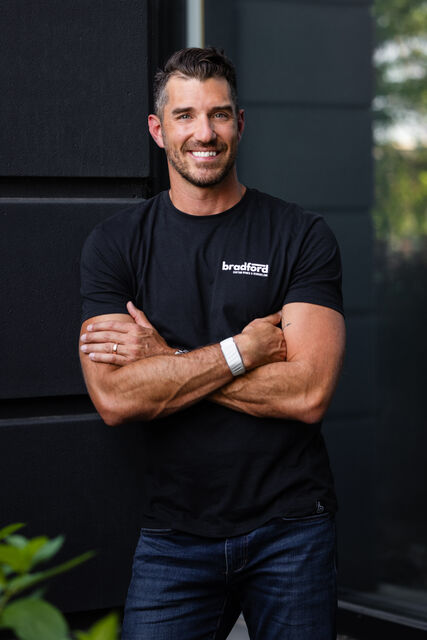
That’s exactly what Reece and Brad Robinson unpack in this episode of Builders, Budgets & Beers. Brad is the founder of Bradford Custom Homes, a luxury custom home builder operating across Atlanta, Charleston, and other high-end markets. His firm acts as an owner’s representative, partnering with architects, designers, and clients to deliver highly customized homes while increasingly focusing on wellness-driven construction and development.
Brad’s perspective is grounded in experience. He’s grown a high-end custom home building business, expanded into new markets, and now thinks about capital not as a necessity, but as a strategic lever.
And his framing is simple, but powerful: “There are so many creative ways to craft a deal and get something out of the dirt, but you’ve got to start with the fundamentals.”
Builders should understand capital before they need it
One of the most common mistakes builders make is waiting too long to think about capital. They don’t engage with it until they need it, when the pressure is already on.
Brad takes a different view. Builders don’t need to master finance overnight, but they do need to understand the core decision that drives everything else:
“Do you want an equity partner, or do you want a debt partner?”
That one question shapes the structure of the deal, the level of control you maintain, and the kind of pressure you’ll feel during execution.
An equity partner shares in the upside and the risk. A debt partner expects repayment, regardless of how the project performs.
There’s no universally right answer. But there is a right answer for your business, your risk tolerance, and your strategy. And if you don’t define that early, you end up reacting instead of deciding.
Raising capital is a second job (and a new kind of accountability)
A lot of builders think of fundraising as a one-time event. You raise the money, then go back to building.
That’s not how it works.
As Brad puts it, “Once you’ve raised it, welcome to having a boss.”
That line hits because it reframes the entire relationship. Capital comes with expectations. Reporting. Accountability. Pressure to perform.
And most importantly, it comes with a clock.
Builders who raise capital are no longer just managing projects. They’re managing investor confidence. That means knowing your numbers, communicating clearly, and executing consistently. It also means understanding that “The easiest money to raise is the first one. Everything after that is based on results.”
That’s where a lot of builders underestimate the shift. The first check might come from trust. The second comes from proof.
Not all capital is good capital
One of the most important insights from the episode is that the type of investor matters just as much as the capital itself.
Brad is intentional about who he partners with and why. “You want an LP who aligns with your vision,” he says. “Not someone who comes in and tries to change your strategy.”
This becomes especially critical when your business is differentiated.
In Brad’s case, that means building wellness-driven homes—properties designed not just for aesthetics, but for performance, recovery, and long-term health. That approach comes with different costs, different systems, and a different type of buyer.
The right investor understands that. The wrong investor questions it. And that’s where things break down. If your capital partner doesn’t believe in the “why,” they won’t support the “how.”
Equity vs debt: what builders actually need to know
For builders actively evaluating capital options, Brad’s framework is worth repeating, and simplifying:
- Equity partners share in the outcome. If the deal wins, they win. If it struggles, they feel it too.
- Debt partners expect repayment, plus interest. Their return is fixed, and the obligation is non-negotiable.
Brad himself has a clear bias. “I don’t like leveraging debt. I never have.”
But he also acknowledges that there are situations where debt makes sense, especially when speed or structure requires it.
The key isn’t avoiding one or the other. It’s understanding what each option means for:
- control
- cash flow
- risk
- and long-term upside
Capital doesn’t fix broken operations
One of the most overlooked parts of this conversation has nothing to do with finance, and everything to do with operations.
Brad is able to think about funds, partnerships, and long-term strategy because he is not stuck in the day-to-day chaos of running jobs. “I spend 100% of my time working on my business. I don’t work in it.”
That’s not a throwaway line. It’s the foundation that makes everything else possible. Because here’s the reality: if your business is still dependent on you for everything—field decisions, approvals, problem-solving—then adding capital doesn’t create leverage. It creates complexity. More projects, more pressure, and more risk.
Without systems, capital amplifies problems instead of solving them.
SOPs are the bridge between where you are and where you’re going
One of the most tactical insights from the episode came around SOPs, something most builders know they should have, but often delay.
Brad reframes them as a growth tool, not just documentation. “Develop your SOPs not just for where you are today—but for the role you’re going to need next.”
That shift is powerful. Because when you start documenting how the business should run, you quickly uncover:
- where decisions are unclear
- where responsibilities overlap
- where you’re still the bottleneck
- and who your next hire actually needs to be
He takes it a step further. “Write your SOPs like someone has to step into your shoes tomorrow and figure it all out.” That level of clarity doesn’t just help you scale. It makes your business more resilient, more transferable, and more investable.
Before you raise capital, get your house in order
For builders earlier in the journey, this episode isn’t a signal to go start a fund or chase investors. It’s a reminder to focus on the fundamentals first.
Brad built his business by doing great work, building a strong reputation, and creating a clear point of differentiation. The capital conversations came later.
Because at the end of the day, “You’ve got to be ready before you go down this path. Life doesn’t have to be this hard.”
That line captures the entire theme.
Capital is powerful. But it also raises the stakes. The builders who benefit most from it are the ones who already have:
- strong systems
- clear processes
- defined roles
- and a strategy they can defend
Final thoughts: capital follows clarity
This episode doesn’t position capital as a shortcut. It positions it as a tool. Used well, it accelerates growth. It unlocks opportunities. It expands what’s possible.
Used poorly, it creates pressure, distraction, and risk.
The difference comes down to clarity: Clarity in your business, clarity in your strategy, and clarity in your partnerships.
Because capital doesn’t create clarity. It exposes it.
Follow Brad Robinson on Instagram